
Category: Product Highlight
Meet Aunty from Unchained Labs: The Fastest, Highest Throughput Protein Stability Characterisation Platform on the planet!


About Aunty
Unchained Labs has raised the bar in biologics characterisation with the launch of Aunty – the world’s fastest and most high-throughput platform for protein stability analysis. Tailored for researchers in biotech, pharma, and gene therapy, Aunty delivers unprecedented speed, sensitivity, and flexibility across a wide range of stability parameters – all from a single 96-well quartz plate.

Why Aunty is a Game-Changer in Protein and Viral Vector Stability Testing
🔬 Comprehensive Stability Profiling — In Minutes
Aunty characterises protein melting (Tm, Tonset), aggregation (Tagg, Tsize), colloidal stability (kD, B22, G22), long-term stability, and viral vector genome ejection, reading a full 96-well plate every minute. With only 8 µL sample per well, it saves valuable material while delivering maximum insight.
💡 Three Technologies. One Platform.
- Full-Spectrum Fluorescence – For intrinsic or dye-based detection of thermal unfolding.
- Static Light Scattering (SLS) – Detects early-stage aggregation with exceptional sensitivity.
- Dynamic Light Scattering (DLS) – Monitors particle size, polydispersity, and colloidal behaviour.
These modalities can be run in parallel or independently, offering complete flexibility to tailor your assay to the molecule at hand.
Explore Aunty’s Core Applications
1. Thermal Ramp Analysis
Track unfolding and aggregation simultaneously using fluorescence and SLS. Aunty’s sensitivity enables detection down to 25 µg/mL, providing reliable Tm and Tagg measurements across formulations, concentrations, and constructs.
2. Protein and Viral Vector Sizing
Aunty’s ISO-compliant DLS covers particles from 0.3 to 1000 nm. Whether you’re working with therapeutic proteins or viral vectors, it delivers high-precision size measurements and polydispersity profiles in seconds.
3. Colloidal Stability
Quantify aggregation risks under different formulations with Aunty’s automated calculation of kD, B22, and G22. This supports developability assessments for high-concentration biologics and formulation transitions (e.g. IV to SC).
4. Capsid and Genome Stability for AAVs
Using SYBR Gold fluorescence, Aunty detects genome ejection temperatures (Tm) in under an hour. It also pinpoints capsid disruption (Tagg) via SLS – essential for viral vector stability profiling.
5. Isothermal Stability Studies
Run long-term thermal stability tests at set temperatures over hours or days. Monitor changes in unfolding or aggregation over time – with sealed wells for sample integrity and minimal instrument occupation.
The Aunty Plate: Quartz Innovation for Precision Science
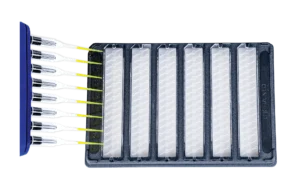
At the heart of Aunty is the first 96-well quartz glass consumable – optimised for superior optical clarity, chemical compatibility, and low-volume use. Automation-friendly and easy to seal, it accelerates workflows and minimises contamination risks.
Fast, Flexible, and Insight-Packed
Aunty’s software simplifies complex workflows with easy setup, real-time monitoring, and intuitive visualisation tools. Whether you’re comparing formulations, screening candidates, or optimising viral vector stability, Aunty delivers actionable results – fast.
Technical Specs at a Glance:
- Sample Volume: 8 µL
- Read Time: 1 minute for 96 samples
- Temperature Range: 15–95°C
- Light Scattering Sensitivity: Down to 0.05 mg/mL (SLS)
- DLS Range: 0.3–1000 nm
- Genome Ejection Sensitivity: ≥5 × 10¹¹ vg/mL
Final Word
Whether you’re optimising a therapeutic antibody, screening excipients, or validating AAV vector stability, Aunty is the gold standard in high-throughput protein and viral vector stability characterisation.
For biotech and pharma researchers looking to speed up developability, reduce material usage, and gain multi-parameter insight in a single run – Aunty is the instrument you’ve been waiting for.
MedChemExpress compound libraries for drug discovery
Screening Libraries
The success of high throughput screening (HTS) in finding decent starting points for drug discovery heavily largely depends on the quality of the compound library. MedChemExpress (MCE) can provide 200+ compound libraries which include Bioactive Screening Libraries, Diversity Compound Libraries, High Throughput Screening Libraries, Fragment Libraries and DNA Encoded compound Libraries (DEL). These libraries contain over 16 million available compounds. What’s more, each compound has validated bioactivity data and/or physicochemical properties. These compound libraries are useful professional tools for drug discovery and new indications research and can be used for HTS, high-content screening (HCS) and virtual screening (VS).
MCE Compound Libraries
- HTS compound database, molecular docking and virtual screening service
- 30,000+ bioactive compounds with clear target and function annotation
- 16,000+ fragment compounds with diverse structures
- Customised libraries are also available

You can customise your compound library

Unleashing Spectral Power: Agilent NovoCyte Opteon Arrives in ANZ
A Joe Blogs post by Joe Roberts, PhD
Spectral flow cytometry continues to transform single-cell research – and now, for the first time, laboratories in Australia and New Zealand can experience the Agilent NovoCyte Opteon first hand.
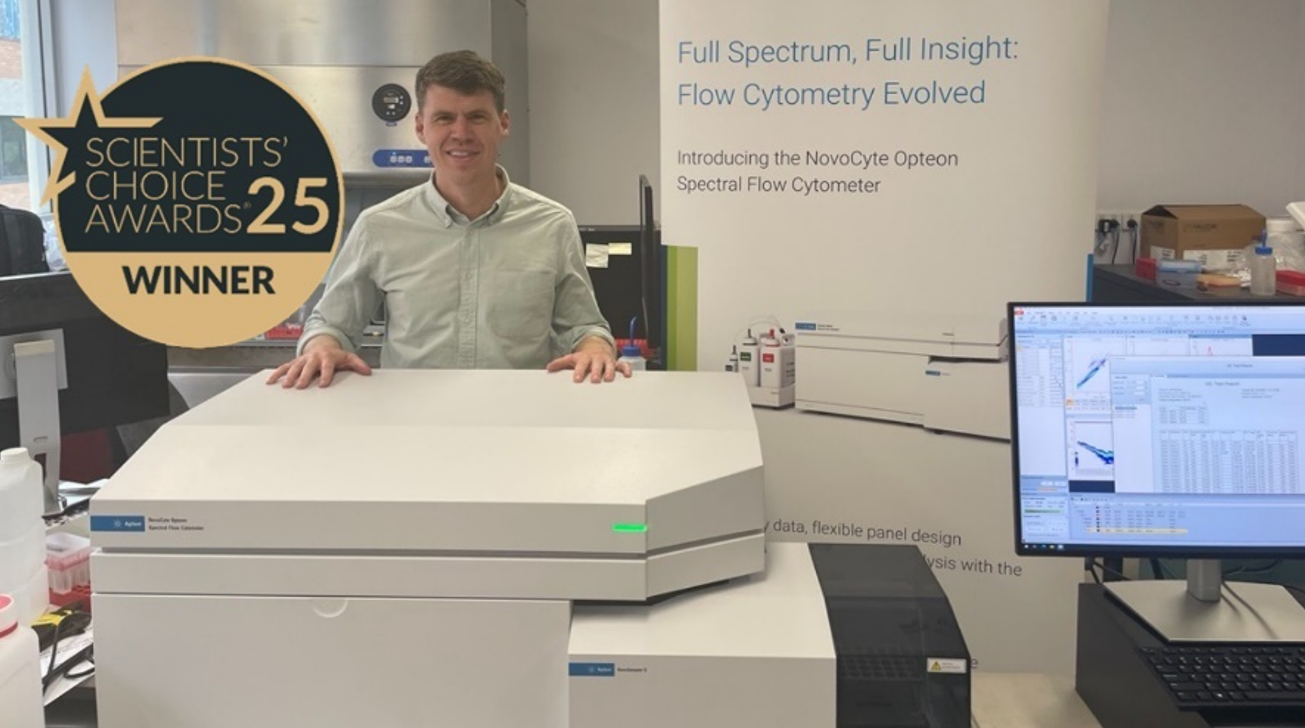
Launched globally at CYTO 2024, the NovoCyte Opteon has already earned international recognition, taking home the Select Science Scientist’s Choice Award for “Best New Drug Discovery & Development Product of 2024.” With up to five lasers, 73 detectors, and cutting-edge optical engineering, this system represents the next generation of high-dimensional cytometry – and it’s now available for demo in ANZ.
Spectral acquisition, redefined
Unlike conventional cytometry, the NovoCyte Opteon captures the full emission spectra of each fluorochrome across all lasers. This approach allows for greater panel flexibility, more accurate unmixing, and cleaner resolution of overlapping signals – ideal for complex immunophenotyping studies.
Spectral Flow Cytometry vs Conventional Flow: What’s the Difference?
Traditional flow cytometry detects fluorescence using individual optical filters for each fluorochrome, limiting panel size and often causing signal overlap.
Spectral flow cytometry – like the Agilent NovoCyte Opteon – captures the entire emission spectrum from every fluorochrome across all lasers.
This enables:
-
Greater panel flexibility with more markers in a single run
-
Improved accuracy through spectral unmixing of overlapping signals
-
Cleaner data by accounting for autofluorescence as a separate spectral component
The result is a more powerful, precise, and reproducible analysis – ideal for complex immunophenotyping and high-dimensional research.
Configurability and Optics
Researchers can choose 3-, 4-, or 5-laser configurations, with the flagship system spanning UV, Violet, Blue, Yellow/Green, and Red lasers – and up to 73 detectors. Agilent’s proprietary optics and electronics maximise sensitivity and spectral separation, ensuring high-quality data.
Dynamic Range, Small-Particle Detection, and Autofluorescence Handling
It boasts a wide dynamic range both for fluorescence and scatter (size) detection, reducing the need for frequent detector adjustments.
Dual-laser small particle detection (using 405 nm and 488 nm SSC) enables detection of particles down to ~80 nm without needing separate adjustments between cell and particle modes.
Also, the instrument supports autofluorescence subtraction (i.e. treating autofluorescence as a spectral component), which helps resolve dim populations more clearly.
Reliability and Stability Built In
To maintain performance in variable lab environments, the NovoCyte Opteon integrates on-board temperature control, fluidics monitoring, electronics sensor circuits, and real-time instrument status feedback.
Automation and Throughput
It’s compatible with the NovoSampler S, accepting 40-tube racks and microplates (384/96/48/24), and is ready for robotic automation. Calibration is automated, with templates for labware types saved for reproducibility. Carryover is minimal (< 0.1 %) via rinse cycles.
Software and Workflows
Agilent’s NovoExpress (Opteon) software version 2.0+ underpins the acquisition, unmixing, analysis, and reporting workflow. They’ve enhanced the user interface with an “unmixing” tab, streamlining spectral unmixing steps. The software supports both real-time acquisition and downstream “offline” analyses.
Joe’s Takeaway
The arrival of the Agilent NovoCyte Opteon in the ANZ region marks a real milestone for spectral flow cytometry. Local researchers now have access to one of the most advanced, award-winning platforms available – combining powerful optics, automation readiness, and Agilent’s renowned reliability, all supported locally by Millennium Science.
If you’re interested in demoing the award-winning NovoCyte Opteon Spectral Flow Cytometer, we’d love to hear from you. Reach out to arrange a hands-on session and see what spectral flow can really do for your research.
And if you’re attending CYTO-Connect (Perth, November 27-29, 2025), come and say hello – we’ll be there showcasing the Opteon and chatting all things spectral!
If you’re interested in a demo of the Opteon, contact us today!
Until next time… happy experimenting!

On this page
- A Joe Blogs post by Joe Roberts, PhD
- Spectral acquisition, redefined
- Spectral Flow Cytometry vs Conventional Flow: What’s the Difference?
- Configurability and Optics
- Dynamic Range, Small-Particle Detection, and Autofluorescence Handling
- Reliability and Stability Built In
- Automation and Throughput
- Software and Workflows
- Joe’s Takeaway
Unlocking the Power of Spatial Biology with the Right Antibody Choices
Secondary Antibody Selection for Spatial Biology
Spatial biology is transforming the way we understand biological systems. By integrating spatial information into research, it provides a holistic view of how cells and molecules interact within their native environment. This approach sheds light on the complex interplay between cellular and molecular components, offering deeper insights into the function and behaviour of living organisms.
To achieve reliable and reproducible results in spatial biology, careful antibody selection is essential. Here are some key considerations:
Consider Host and Target Species
Secondary antibody selection begins with species. The host of your secondary must differ from both the tissue species and the host of the primary antibody. For example, when using a rabbit primary antibody on human tissue, a goat anti-rabbit secondary is preferred. This reduces background interference and ensures the signal reflects true binding rather than cross-reactivity..
Match Secondary to Primary Class
Not all primary antibodies are the same. Polyclonal IgGs require anti-IgG secondaries, while monoclonal IgMs need anti-IgM secondaries. For monoclonal IgG subclasses (such as IgG1), it is best practice to use subclass-specific secondaries (anti-IgG1) for maximum accuracy. This level of matching safeguards against nonspecific binding and strengthens reproducibility.
Affinity-Purified: Cut the Noise
Affinity purification ensures secondaries recognise their targets with high specificity. By removing unwanted immunoglobulins, affinity-purified antibodies deliver clearer signals and consistent results – especially when detecting low-abundance proteins. The result: less noise, less background, and greater confidence in your data.
Cross-Adsorbed for Multiplexing
Spatial biology thrives on multiplexing, but multiple species and fluorophores introduce complexity. Cross-adsorbed antibodies are refined to remove cross-reactive components, lowering background and minimising false positives. This makes them ideal for multi-label experiments where precision is paramount.
Choose the Right Fluorophores
Signal clarity depends on the brightness and stability of your fluorophores. Rockland offers a wide range of conjugates, including DyLight™, Cy™, and FITC dyes. These high-performance labels are particularly powerful for detecting low-expression targets, ensuring that no signal is missed in complex tissue environments.
A Case in Point: Neural Crest Imaging
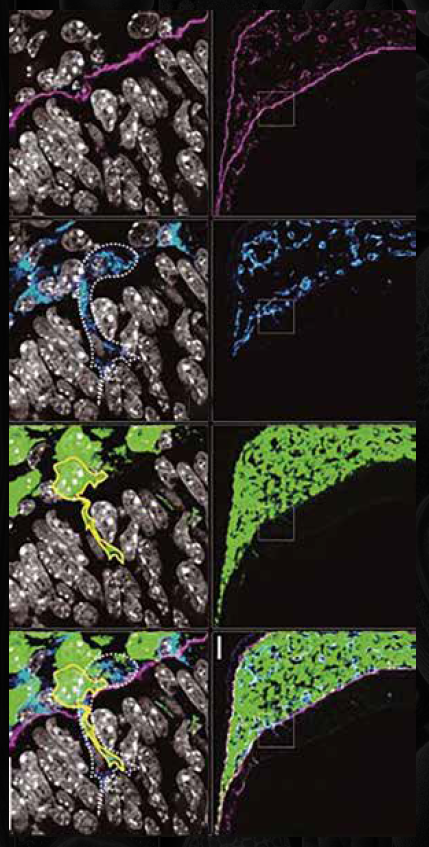
In one example, Rockland’s DyLight™ 649-conjugated goat anti-rat secondary antibodies were used to visualise neural crest-derived cells infiltrating the brain region of a mouse embryo. The result was a sharp, specific signal that allowed researchers to trace cell migration and interactions in detail. This illustrates the impact that well-chosen secondary antibodies can have on spatial imaging outcomes.
Conclusion
When it comes to spatial biology, success is in the details. Rockland’s secondary antibodies – affinity-purified, cross-adsorbed, and conjugated to high-performance fluorophores – provide the specificity and sensitivity needed for reproducible results.
Introducing Atlas™: The Next Era of Cell Imaging
Better data. Faster breakthroughs. Confident choices.
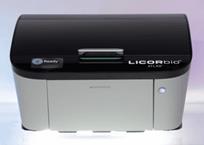
LICORbio’s new Atlas™ Imager is redefining cell imaging for life science researchers across Australia and New Zealand. Built for both 2D and 3D assays, Atlas combines speed, scale, and clarity in a single, easy-to-use platform – empowering scientists to accelerate discoveries in drug development, translational research, and beyond.
Smarter, Faster, Scalable Imaging
Unlike traditional systems that require manual stitching or time-consuming illumination corrections, Atlas is engineered to deliver whole-plate imaging in less than one minute. Its patented line-scanning optical system minimises background fluorescence, boosts sensitivity, and enhances multiplexing capabilities – critical for high-throughput screening and complex cell-based assays.
Key advantages of the LICORbio Atlas
- High throughput – Acquire entire well plates rapidly or zoom into single wells with up to 5µm resolution.
- Broad applications – Capture cell viability, luminescence, and multiplex fluorescence data in one instrument.
- Deep 3D imaging – Confidently image spheroids, organoids, organ-on-a-chip models, and other microphysiological systems.
- Ease of use – Streamlined workflows reduce manual steps and consolidate multiple instruments into one solution.
- Cost-effective – Higher-content imaging without the high price tag of competitive systems.

Designed for Today’s Translational Research
From monitoring cell culture to high-resolution plate and well scanning, Atlas provides reliable, reproducible, and quantitative results with minimal hands-on time. With over 30 imaging channels spanning UV to near-infrared, researchers gain unmatched flexibility for diverse applications – from drug screening to advanced tissue modelling.
By eliminating inefficiencies and post-processing steps, Atlas lets you focus on what matters most: generating insights that move science forward.
Why Atlas Stands Out
- Whole-plate scans in under one minute
- Z-stack multiplex fluorescence for 3D studies
- Built-in luminescent imager
- Over 30 imaging channels with six lasers plus RGB LED
- End-to-end solution for cell-based assays
Accelerate Your Next Discovery
Whether you’re developing new therapeutics, studying disease models, or advancing organoid research, Atlas is the balanced solution for speed, sensitivity, and scalability in cell imaging.
The Reagent Insider: Advancing Alzheimer’s research
Tips, insights and updates
As the leading cause of dementia, Alzheimer’s disease impacts over 50 million people worldwide. In Australia, dementia has recently overtaken heart disease as the leading cause of death, particularly among women. While current treatments focus on symptoms, new research aims to target the underlying disease from clearing amyloid-β, inhibiting tau aggregation, and modulating neuroinflammation to understanding the gut-brain axis and early metabolic changes in AD.
Hot Product
StressMarq’s high-quality tau, amyloid-β, and alpha-synuclein proteins support research into the mechanisms underlying Alzheimer’s disease. Contact us for details.

Exploring the Gut-Brain Link in Alzheimer’s
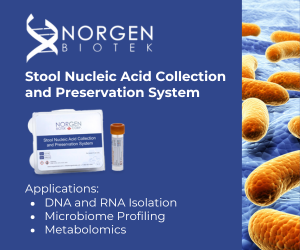
Emerging studies show gut health influences cognitive function, with a balanced microbiome and Mediterranean diet potentially lowering dementia risk. Using Norgen Biotek’s Stool Nucleic Acid Collection and Preservation Systems, researchers are uncovering novel approaches to tackle cognitive decline.
Connect with Narisa Dawar to learn more about Norgen Biotek.
Lab Favourite
Silence Alzheimer’s-related genes with siRNA.
Targeting tau reveals its role in microtubule stability and neurofibrillary tangles. Check out Revvity’s Dharmacon™ siRNA solutions.

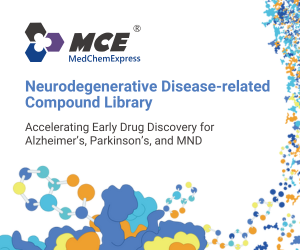
MedChemExpress Neurodegenerative Disease-related Compound Library
This library of 2,960 compounds targets amyloid-β, dopamine receptors, COMT, LRRK2, 5-HT receptors, and more! Perfect for high-throughput, high-content screening of neurodegenerative mechanisms and potential treatments for Alzheimer’s, Parkinson’s, and MND.
Curious about MCE’s compound libraries? Christine Goy is just an email away!
Protocol Tip
Stay on track in Alzheimer’s research. Use InvivoGen’s Mycoplasma Strip to detect contamination early to ensure reliable neuronal and glial culture results. Email Christine Goy for details.

Metabolomics and the Brain
Understanding early metabolic changes in Alzheimer’s disease may identify new therapeutic targets and predictive biomarkers. Metabolomics can detect these subtle biological shifts before clinical symptoms appear, supporting the development of early interventions and treatments that may improve outcomes for people with AD.

Advance Your Infectious Disease Research with ACROBiosystems
Power Your Research: Proteins, Antibodies & More Await!
As we step into the new year, Millennium Science is excited to partner with you in advancing your research! Whether you’re embarking on groundbreaking projects or tackling routine experiments, our exclusive selection of ACROBiosystems reagents for infectious disease research is designed to support every stage of your work. With special offers on premium products, we are committed to providing you with the tools needed to achieve precise, reliable results in virology and immunology studies.
Why Choose ACROBiosystems Reagents for Infectious Disease Research?
ACROBiosystems is a trusted global leader in the development of high-quality recombinant proteins, antigens, antibodies, and assay kits for infectious disease research. Their reagents are widely used in vaccine development, antibody screening, diagnostic assay development, and therapeutic drug discovery. With a comprehensive portfolio spanning immunology, oncology, and virology, ACROBiosystems ensures reproducibility and accuracy in scientific experiments.
Key Benefits of ACROBiosystems Reagents:
- High Purity & Bioactivity – Ensuring reliable and consistent experimental results.
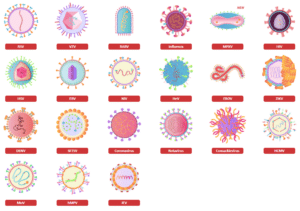
- Extensive Product Portfolio – Covering a wide range of infectious disease targets, including SARS-CoV-2, influenza, RSV, HPV, and more.
- Custom Solutions Available – Tailored reagents to meet specific research needs.
- Validated for Diagnostic and Therapeutic Applications – Trusted by leading biotech and pharmaceutical companies.
Millennium Science is a proud distributor of ACROBiosystems, offering exclusive access to their latest products and technical expertise.
The Global Impact of Infectious Diseases
Infectious diseases, caused by viruses, bacteria, fungi, and parasites, continue to pose significant global health risks. These diseases can spread through direct human contact, contaminated water, airborne transmission, and insect vectors. Some of the most pressing infectious diseases include:
- Respiratory Viruses – Influenza, respiratory syncytial virus (RSV), SARS-CoV-2
- Zoonotic Diseases – Rabies, Hendra virus, Nipah virus
- Oncogenic Viruses – Human papillomavirus (HPV), Epstein-Barr virus (EBV)
- Tropical & Vector-Borne Diseases – Malaria, dengue fever, chikungunya
With the ongoing threat of pandemics and emerging viral infections, researchers worldwide are focused on vaccine development, antiviral drug discovery, and improved diagnostic methods.
Addressing Viruses of Concern with Advanced Reagents
Since late 2019, the SARS-CoV-2 pandemic has highlighted the importance of robust virology research and vaccine development. Historically, diseases like smallpox, the plague, and the Spanish flu have had profound impacts on human society. Today, viruses such as influenza, rabies, RSV, and HPV continue to threaten global health.
To combat these challenges, scientists rely on high-quality recombinant proteins, neutralising antibodies, and assay development tools to accelerate vaccine research and therapeutic discoveries.
Our Commitment to Advancing Infectious Disease Research
At Millennium Science, we are dedicated to supporting virologists, immunologists, and infectious disease researchers with cutting-edge reagents that drive progress. Our partnership with ACROBiosystems enables us to provide:
- Top-tier reagents for virus research, vaccine development, and drug discovery.
- Access to the latest recombinant proteins and antigens.
- Ongoing technical support and consultation for product selection and protocol optimisation.
Explore Our Reagents for Infectious Disease Research
Click below to search our extensive catalogue of ACROBiosystems reagents for your infectious disease research, and discover how Millennium Science can support your next breakthrough!
On this page
- Power Your Research: Proteins, Antibodies & More Await!
- Why Choose ACROBiosystems Reagents for Infectious Disease Research?
- The Global Impact of Infectious Diseases
- Addressing Viruses of Concern with Advanced Reagents
- Our Commitment to Advancing Infectious Disease Research
- Explore Our Reagents for Infectious Disease Research